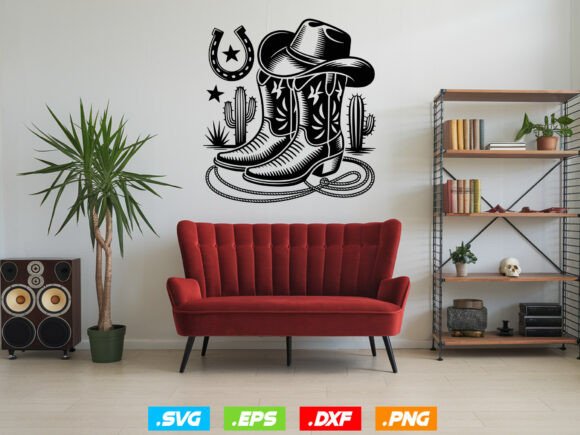
★★★★☆4.5(107 reviews)
Cowboy Elements SVG: A Wild West Embroidery Design Review
Real-World Performance and Use Cases
- Custom Apparel: On sweatshirts and t-shirts, the design stitches cleanly and maintains its shape through multiple washes. The use of running stitch and fill stitch gives it a dimensional feel without being too bulky.
- Tote Bag Design: The open canvas of a tote allows the design to breathe. I recommend placing the larger elements near the bottom for a grounded look and using smaller details around the top edge to add texture and interest.
- Baby Clothes & Holiday Gifts: The softer elements of the design lend themselves well to these more delicate applications. A tiny horse silhouette or rope motif embroidered on a onesie or gift tag feels both personal and professional.
- Embroidered Patches: This design shines when transformed into patches. The clear outlines and minimal overlap make it easy to cut and transfer, and the final result is something that can be sewn onto jackets, jeans, or even backpacks with ease.
- Home Decor Items: Pillow covers, tea towels, and aprons become instant conversation starters with this design. Especially on kitchen towels, the contrast of thread colors really pops against white or light-colored fabrics.
Where to Use With Caution
- Small Hoop Sizes: Some elements are detailed and might require more space than expected. If you're working within tight constraints, consider resizing or simplifying parts of the design.
- Textured or Thin Fabrics: The fine lines and intricate shapes may struggle to show up clearly on stretchy or loosely woven materials. Always test on scrap fabric first.
- Dark Backgrounds: While the design is rich in character, it relies heavily on contrast. Using it on dark fabric could dull its impact unless you choose thread colors that stand out.
- Curved Surfaces (e.g., Caps): Placing it on curved surfaces requires attention to placement and scaling. I noticed some distortion if not aligned properly, so take time to adjust before stitching.
- Frequent Washing: For items like aprons or towels that undergo regular laundering, ensure you use durable threads and proper backing to maintain stitch integrity over time.
Designer Notes and Best Practices
- Test on Scrap Fabric: Especially if you're planning to use it on a new material or in a different scale.
- Check Thread Color Contrast: Dark thread on dark fabric won't work. Opt for lighter or metallic shades for better visibility.
- Review Stitch Density: Areas with dense stitching may pucker if not stabilized correctly. Adjust accordingly for best results.
- Confirm Hoop Size: Make sure the design fits comfortably within the intended hoop dimensions. Stretching or shrinking can affect detail clarity.
- Inspect Small Details: Zoom in and check for tiny elements that might disappear or distort at smaller sizes.
- Use Proper Stabilizer: Especially important for stretchy or thin materials to prevent distortion and ensure smooth stitching.
- Test Black-and-White Mockups: Sometimes color choices can mislead. A black-and-white preview helps you assess form and contrast accurately.
- Compare Light and Dark Fabrics: See how the design behaves under different lighting conditions and fabric colors.
- Check Licensing Before Selling: If you plan to sell finished products or digital embroidery files, confirm whether the original license supports commercial use.
⬇️ Download Free
Free download · No sign-up required
🔗 You Might Also Like
Crafts
Real-World Applications and Project Suitability Custom Apparel: Think cowgirl sh...
Crafts
First Impressions of the Wild West Opossum, Cowboy, Rodeo Svg When I first opene...
Crafts
As a seasoned embroidery designer and product reviewer, I’ve tested countless SV...
Crafts
If you're an embroidery designer or a small business owner looking to add a touc...
Crafts
As an experienced embroidery designer and product reviewer, I often find myself ...
